

The Big News: India Slashes Cotton Import Duty
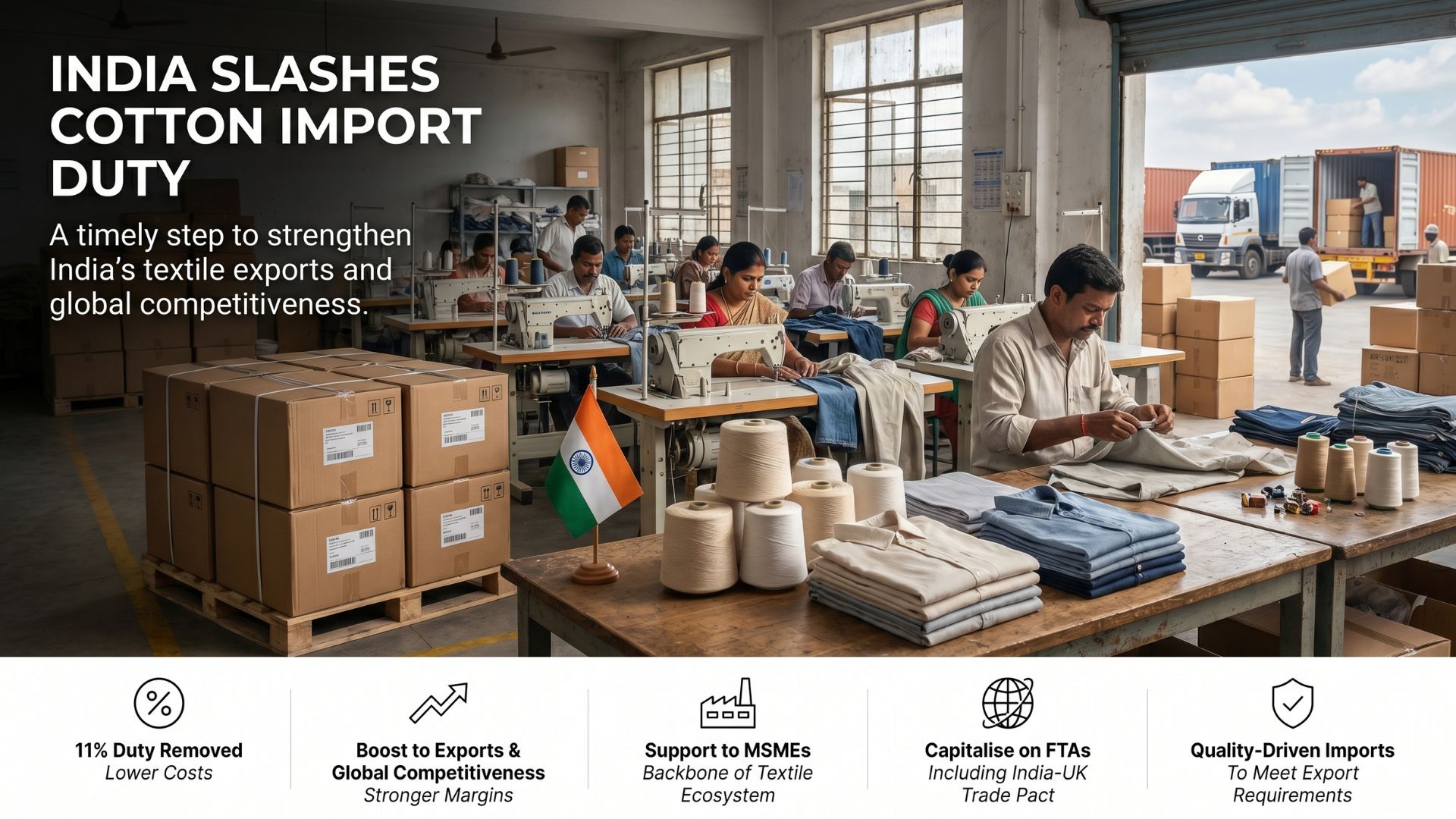
India Slashes Cotton Import Duty

This Tax Cut Matters for the Raw Material Supply Chain
new NoName logo
India removes cotton import duty until Oct 2026, boosting textile manufacturing, stabilizing supply chains, and strengthening global apparel sourcing.
New Policy Expected to Improve Raw Material Access, Strengthen Supply Chains, and Enhance Global Competitiveness
India's textile and apparel industry has received a significant policy boost with the government's decision to remove the cotton import duty on raw cotton imports from June 1 to October 31, 2026. The move eliminates the previous 11% customs duty, creating new opportunities for textile manufacturers, garment exporters, and international fashion brands sourcing from India.
While the immediate benefit is lower raw material costs, the long-term impact is much broader. The policy improves access to premium cotton varieties, strengthens supply chain stability, supports production continuity, and enhances India's position as a leading global apparel manufacturing destination.
For international apparel brands, retailers, and private-label businesses, the timing is particularly important. As brands continue to diversify sourcing strategies and seek reliable manufacturing partners, India is becoming an increasingly attractive choice thanks to its strong textile infrastructure, skilled workforce, and vertically integrated supply chain.
Why the Cotton Import Duty Removal Matters
Cotton remains the foundation of India's textile industry. Although the country is one of the world's largest cotton producers, manufacturers often require specialized cotton varieties to meet the quality standards of international buyers.
The removal of the cotton import duty allows spinning mills and textile producers to source premium cotton from global markets without the added tax burden. This provides greater flexibility in raw material procurement and helps manufacturers produce a wider range of fabrics and garments for export markets.
Access to high-quality cotton is particularly important for premium apparel, luxury garments, home textiles, and performance fabrics where fibre quality directly affects the final product.
By making imported cotton more accessible, the policy strengthens the entire manufacturing ecosystem and helps suppliers respond more effectively to changing global demand.
Improving Supply Chain Stability
One of the biggest challenges for textile manufacturers is managing fluctuations in raw material prices and availability. Weather conditions, crop cycles, and market volatility can significantly affect cotton prices and disrupt production planning.
The cotton import duty exemption provides manufacturers with greater sourcing flexibility. When domestic cotton prices become unstable, or supplies tighten, businesses can access global cotton markets more efficiently.
This flexibility helps spinning mills, fabric manufacturers, and garment exporters maintain consistent production schedules while reducing procurement risks.
For international buyers, a more stable raw material supply chain means improved reliability, better production planning, and fewer disruptions during critical sourcing periods.
Strengthening India's Global Competitiveness
The removal of the cotton import duty also strengthens India's ability to compete with other major apparel-exporting nations.
Countries such as Bangladesh, Vietnam, and Sri Lanka have long benefited from easier access to imported raw materials, allowing them to remain competitive in global garment manufacturing. The previous duty structure often created a cost disadvantage for Indian manufacturers.
With the duty removed, Indian suppliers can access premium cotton more competitively and offer stronger value to international buyers.
Combined with India's growing network of trade agreements, modern manufacturing facilities, and expanding export infrastructure, the policy further enhances the country's attractiveness as a sourcing destination.
As global brands increasingly prioritize supply chain resilience, compliance, sustainability, and manufacturing scale, India is well-positioned to capture a larger share of international apparel sourcing.
Benefits for International Fashion Brands
The impact of the cotton import duty removal extends beyond textile mills and manufacturers. Global fashion brands sourcing from India are also expected to benefit.
Improved access to premium cotton varieties enables manufacturers to develop higher-quality products while maintaining competitive pricing. This creates opportunities for brands seeking premium cotton apparel, sustainable collections, and value-driven sourcing solutions.
The policy also supports more predictable production planning. Manufacturers can secure raw materials more efficiently, reducing the likelihood of supply shortages that could affect delivery schedules.
For retailers and private-label brands, this translates into stronger supply chain reliability, improved product consistency, and greater confidence when planning seasonal collections.
Supporting a More Integrated Manufacturing Ecosystem
Modern fashion brands increasingly prefer sourcing partners that can manage multiple stages of production within a single ecosystem. This approach improves transparency, reduces lead times, and simplifies supply chain management.
The cotton import duty exemption supports this trend by allowing Indian manufacturers greater flexibility in sourcing raw materials while keeping production activities centralized.
From yarn spinning and fabric development to garment manufacturing and export operations, businesses can now manage production more efficiently within India's extensive textile network.
This creates a smoother sourcing experience for international buyers while improving operational efficiency across the industry.
NoName Supports Global Apparel Manufacturing
As international brands continue to expand sourcing operations in India, NoName remains committed to supporting fashion businesses with scalable garment manufacturing solutions and export-ready production systems.
With expertise in private-label manufacturing, quality-controlled production, sustainable sourcing, and global apparel exports, NoName helps brands navigate changing market conditions while maintaining product quality and delivery reliability.
By leveraging India's evolving textile ecosystem and improved raw material access, NoName continues to support retailers, wholesalers, and fashion brands looking for dependable manufacturing partnerships.
Conclusion
The removal of the cotton import duty represents a strategic step forward for India's textile and apparel sector. By improving access to premium cotton, strengthening supply chain resilience, and enhancing manufacturing competitiveness, the policy creates long-term benefits for manufacturers and international buyers alike.
As global sourcing patterns continue to evolve, India's combination of textile expertise, production capacity, skilled labor, and strong supply chain infrastructure makes it an increasingly attractive destination for apparel manufacturing.
For brands seeking reliable sourcing partners, improved product quality, and competitive production capabilities, this policy further reinforces India's position as one of the world's leading apparel manufacturing hubs.
Pankaj Agrawal
Celestial Corporation
+91 96505 08508
pankaj@celestialfix.com
Visit us on social media:
LinkedIn
Instagram
Facebook
YouTube
India just made a major move for the global fashion industry.
Legal Disclaimer:
EIN Presswire provides this news content "as is" without warranty of any kind. We do not accept any responsibility or liability for the accuracy, content, images, videos, licenses, completeness, legality, or reliability of the information contained in this article. If you have any complaints or copyright issues related to this article, kindly contact the author above.
